


2025 Laid Bare: The scandals that shook Kenyan sport
.jpg)
.jpg)




Reading Time: 6min | Tue. 30.12.25. | 11:30
In 2025, Kenyan sport reminded the world of its brilliance, and warned itself of the cost of ignoring its flaws
Kenyan sport in 2025 soared to remarkable heights, delivering moments that will live long in the nation’s memory.
Follow Our WhatsApp Channel For More News
From the track to the rally stages, it was a year that showcased Kenya’s enduring excellence and global relevance.
At the World Athletics Championships in Tokyo, Kenya produced one of its finest performances ever, finishing second overall with 11 medals.
Beatrice Chebet etched her name into history with a stunning double in the 5,000m and 10,000m, while Faith Kipyegon claimed her fourth world title.
Gold medals from Peres Jepchirchir, Lilian Odira, and Emmanuel Wanyonyi crowned a championship where Kenyan women swept all middle- and long-distance titles.
Away from the track, marathon dominance continued unabated, with Sebastian Sawe, John Korir, and Joyciline Jepkosgei flying the flag high on the global road-running circuit.
All the glory goes to Kenya 🇰🇪
— World Athletics (@WorldAthletics) September 20, 2025
Watch Beatrice Chebet and Faith Kipyegon kick to 🥇 and 🥈 in the 5000m, just ahead of 🇮🇹's Nadia Battocletti 💫#WorldAthleticsChamps pic.twitter.com/KPVCUtxjKL
Kenya also played gracious host, welcoming the world to events such as the Safari Rally Kenya on the World Rally Championship calendar, the African Nations Championship (CHAN) co-hosted with Uganda and Tanzania, the CAC Road Cycling Championships in Iten, the Safari Sevens, and the Africa Women’s Sevens Cup.
In a quieter but equally powerful moment, Kenyan darts player David Munyua stunned the world at the PDC World Darts Championship with a giant-killing performance that placed an unexpected spotlight on Kenya in a traditionally European sport.
Yet, as the old saying goes, every shining coin has a darker reverse; for all the brilliance on the field, 2025 also exposed the cracks beneath Kenyan sport’s glittering surface.
It was one of the most turbulent years in recent history, as off-field controversies repeatedly threatened to overshadow sporting success.
From multi-billion-shilling corruption investigations to doping scandals that scarred Kenya’s athletic reputation, the year laid bare long-standing weaknesses in governance, accountability, and integrity.
These scandals did not occur in isolation; together, they painted a troubling portrait of a system struggling to reform under both local and international pressure.
Mozzart Sport Kenya takes a closer look at the major scandals that rocked the sporting world and nearly left a lasting dent on the country’s image.
1. Sports Ministry Graft Probe: Billions Under Question
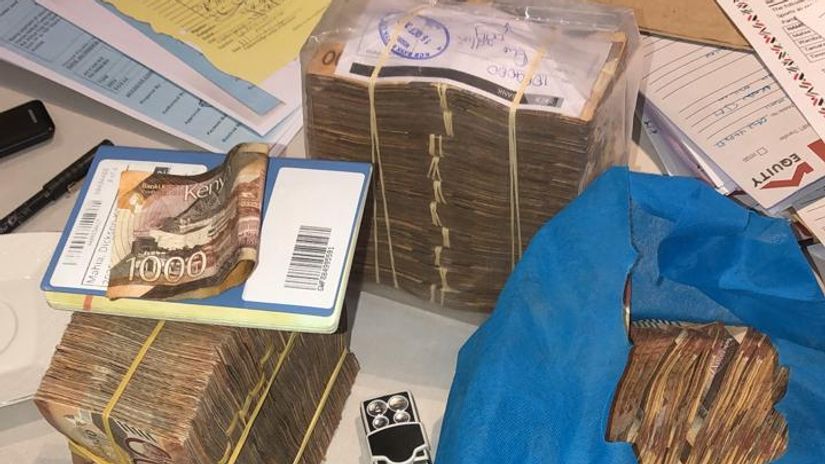
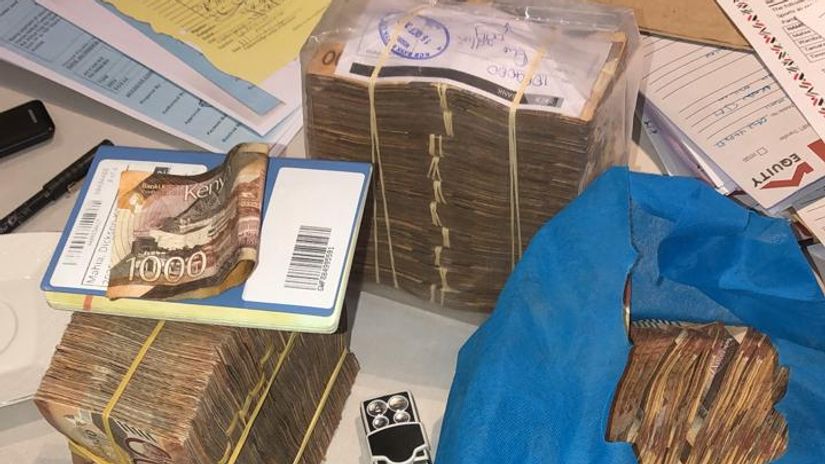
The most far-reaching scandal of the year erupted in November, when the Ethics and Anti-Corruption Commission (EACC) raided offices and residences linked to the State Department for Sports.
At the center of the probe was the alleged loss of KSh 3.8 billion through fraudulent procurement and fictitious payments.
Among those named were Caroline Muthoni Kariuki, Senior Assistant Commissioner of Sports; Otis Mutwiri Nturibi, Deputy Accountant General (ASALs and Regional Development); David Muasya Musau, an accountant at the department; Dickson Kibunyi Mahia, director of Turkenya Tours and Safaris Limited; and Maureen Wangui Wambugu, director of Smart Flows Travel Limited.
The alleged offenses span the 2020/2021 to 2025/2026 financial years.
They stole KES 3.8B, then parked KES 597M of it in government securities.
— Mwango Capital (@MwangoCapital) November 5, 2025
Rob the state, lend it back to the state, collect the interest.
Unreal full-circle economics. https://t.co/bRanAW6XjZ pic.twitter.com/wFBQLNVPZG
According to the EACC, the suspects abused positions of trust to embezzle public funds through collusion and procurement fraud, inflating contracts and processing payments for nonexistent services meant to support sports development.
The scale of the alleged loot was staggering; the raids yielded Sh5.46 million in cash, Sh597 million in government securities, 13 motor vehicles, 28 land properties, and 37 bank accounts.
Funds under scrutiny included allocations for athlete facilitation, sports events, and infrastructure.
An EACC official described the corruption as “systemic rather than incidental,” a damning assessment that struck at the heart of sports administration, even as athletes continued to complain of delayed allowances and inadequate preparation.

2. Sports Kenya and Stadium Funds
Closely linked to the ministry probe was a parliamentary investigation into Sports Kenya, where lawmakers flagged glaring inconsistencies in stadium renovation and construction costs.
An inquiry by the Public Investments Committee on Social Services, Administration, and Agriculture (PIC-SSAA) revealed ballooning budgets across multiple projects, with millions of shillings unaccounted for.
MPs questioned how projects such as Kinoru Stadium saw costs escalate from Sh109 million to Sh355 million, leaving Sh246 million unexplained.
Sports Kenya CEO Gabriel Komora faced tough questioning over missing documents, stalled works, and unexplained expenditure.
The committee warned that poor financial discipline was eroding Kenya’s credibility as a host of major competitions.
When Munyua qualified for PDC, ordinary darters were forced to fundraise & support his dream. Munyua approached Magical Kenya & the Ministry of sports for sponsorship. PS Sports said the ministry has resources for football & athletics only. Infact, they said GoK cannot sponsor… pic.twitter.com/ZxHN3m3ZJ0
— George T. Diano (@georgediano) December 19, 2025
The probe also uncovered irregular payments linked to the World U18 Athletics Championships.
Sports Kenya reportedly spent Sh382 million, yet only Sh274.8 million was refunded by the ministry, leaving Sh47.39 million outstanding, alongside Sh73 million in unpaid interest certificates.
Payments of Sh48 million to Athletics Kenya officials lacked proper documentation, with attempts to shift blame to the Local Organizing Committee firmly rejected.
“These are not accounting errors. This is public money disappearing without justification,” committee member Caleb Amisi said.
3. Athletics Doping Crisis: Big Names, Bigger Damage
If corruption bruised administration, doping scandals cut directly into Kenya’s global athletic identity.
The most devastating case involved Ruth Chepngetich, the women’s marathon world record holder, who received a three-year ban after testing positive for hydrochlorothiazide, a banned diuretic often used as a masking agent.
Her explanation of accidental ingestion was dismissed by the Athletics Integrity Unit (AIU).
The case reignited debate over athlete education, monitoring, and accountability, particularly among elite runners.
Other cases followed; Kibiwott Kandie, the former half-marathon world record holder, was provisionally suspended for evading a doping test.
Faith Chepchirchir Kiprotich was suspended after testing positive for norandrosterone, while several unnamed athletes were locked out of World Championships trials for failing whereabouts requirements.
Together, the cases reinforced the perception of a doping problem Kenya has struggled to contain.
4. WADA Warning: Kenya on the Brink
The situation escalated when the World Anti-Doping Agency (WADA) declared Kenya non-compliant with the World Anti-Doping Code, issuing a 21-day ultimatum to address governance and operational failures at ADAK.
The warning raised the specter of international sanctions, including athletes competing under a neutral flag, exposing institutional weaknesses that went far beyond individual offenders.
ADAK has until March 2, 2026, to execute its corrective action plan to the satisfaction of WADA's Compliance Review Committee, with the Kenyan government pledging to increase funding and implement reforms within ADAK, including improved governance, testing, and intelligence gathering.
WADA President Witold Banka stated there is a clear and serious doping problem in Kenya that requires strong government action.
5. Football Chaos: Fines, Debt, and Governance Woes
Football, too, wrestled with its demons; the Football Kenya Federation (FKF) continued to grapple with financial instability and governance challenges, while Kenya was fined by CAF over security lapses at Kasarani Stadium during a CHAN fixture.
Poor crowd control, unauthorized access, and safety failures drew stern warnings, highlighting organizational shortcomings even as the country eyes co-hosting future continental tournaments.
CHAN also exposed the rise of ticket cartels, with some tickets allegedly hoarded and resold at inflated prices, turning passion into profit at the expense of fans.
6. Match-Fixing: The Game Beneath the Game
In 2025, match-fixing scandals laid bare the dark underbelly of Kenyan football. In March, FKF launched an investigation into national team goalkeeper Patrick Matasi after a covert video suggested possible manipulation of an AFCON qualifier against Cameroon.
Kenya's goalkeeper shockingly accused of match fixing as the country's football federation launch an investigation 😳🇰🇪 pic.twitter.com/or1dqS9GpX
— Daily Mail Sport (@MailSport) March 28, 2025
Weeks later, FIFA expelled Muhoroni Youth FC from the National Super League (NSL) for match-fixing, a rare and heavy-handed sanction that sent shockwaves through the domestic game.
Despite the high-profile cases, match-fixing continues to be whispered about rather than confronted head-on. As 2025 closes, many wonder whether 2026 will finally force the truth into the open.